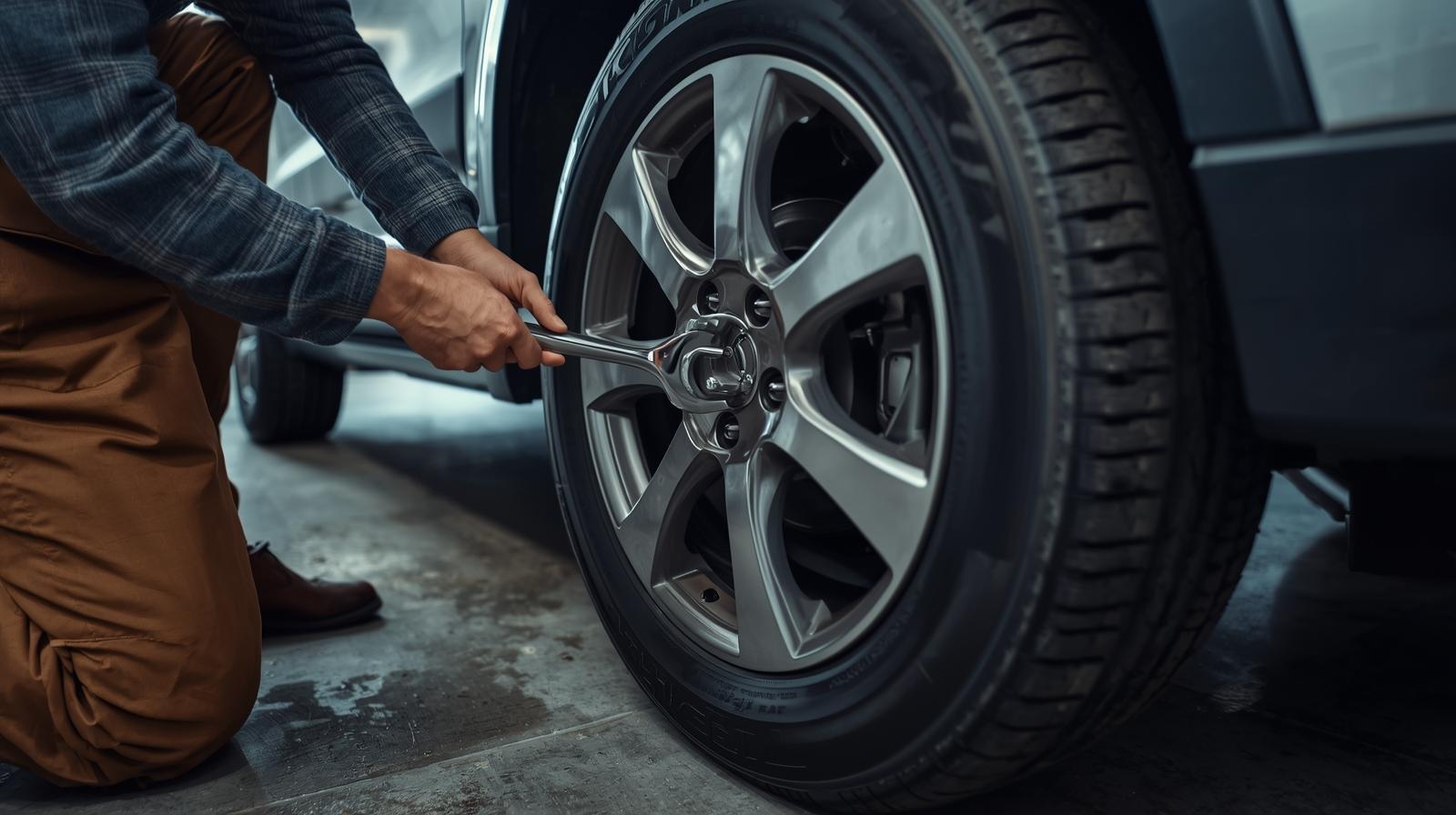
If you drive an all-wheel drive (AWD) vehicle, you've likely heard the advice: "Replace all four tires at the same time." For many drivers, this sounds like a clever sales tactic to boost a tire shop's profit. But as my friend recently discovered at Costco, this isn't a ploy—it's a critical rule for the health of certain AWD systems.
The simple truth is that while all AWD systems are not created equal, ignoring tire uniformity can lead to thousands of dollars in repairs. Here's why a seemingly minor detail can lead to major consequences.
Not All AWD Systems Are the Same
The key difference lies in how the AWD system is designed. Most are either "full-time" or "on-demand."
AWD System Types:
Full-Time AWD (e.g., Subaru Symmetrical AWD, Audi Quattro)
These systems, often considered more performance-oriented, are mechanically designed to send power to all four wheels constantly. Since power is always engaged, the system expects all four tires to rotate at a consistent rate.
On-Demand AWD (e.g., many Lexus SUVs, Toyota, Honda models)
These vehicles primarily operate in two-wheel drive (front or rear) for better fuel efficiency. When wheel slip is detected, an electronic coupling engages to send power to the other axle. Because the AWD is not constantly active, it is more forgiving of small differences in tire size.
The Danger of Mismatched Tire Circumference
Regardless of the system, a worn tire has a smaller circumference than a new one. This is the root of the problem for all full-time AWD vehicles.
AWD systems constantly compensate
When a new tire (with a larger circumference) is mixed with three worn tires, it will rotate at a slightly different speed. The AWD system's computers interpret this constant difference in wheel speed as slippage and continuously engage the differentials to compensate.
Constant stress leads to failure
These differentials are designed to compensate for temporary differences, such as when you turn a corner. They are not built for constant engagement. This continuous compensation causes extra heat, friction, and wear on critical drivetrain components like the transfer case and differentials.
The quiet path to a massive bill
This damage rarely announces itself with a dramatic bang. Instead, it's a gradual, unseen deterioration that can result in catastrophic failure of the transfer case or differentials. Repairs for these components can cost thousands of dollars, making the price of four new tires seem like a bargain.
Beyond Audi and Subaru: Other Sensitive AWD Systems
While Subaru and Audi are famous for their sensitive AWD, they are not the only ones. Other performance-oriented and mechanically complex systems are also at risk. These can include:
- •Acura (SH-AWD): The highly advanced Super Handling All-Wheel Drive system is very sensitive to differences in tire diameter.
- •Porsche (most AWD models): Many all-wheel drive Porsche vehicles are known to be sensitive to tread depth variations.
- •Nissan GT-R (ATTESA E-TS): The GT-R's complex AWD system requires precise synchronization of all four wheels.
- •Mitsubishi Lancer Evolution (S-AWC): The Evolution's all-wheel control system is built for performance and is not tolerant of mismatched tires.
- •Volkswagen (4MOTION): Older mechanical 4MOTION systems, or more aggressive modern ones, also require uniform tire wear.
How to Protect Your Investment
For any AWD owner, here's how to protect your vehicle from a costly mistake:
Protection Strategies:
- 1Always replace all four tires at once.
This is the safest and most reliable method to ensure all tires have the same circumference and tread depth.
- 2Follow manufacturer recommendations.
Always check your vehicle's owner's manual for specific guidelines on acceptable tread depth differences. Many recommend a tolerance of no more than 2/32".
- 3Rotate tires regularly.
For any AWD car, regular tire rotations are critical. This ensures all four tires wear at a uniform rate, delaying the need for a full replacement.
- 4Consider tire shaving.
If you damage a tire when the other three are still relatively new, some tire shops can "shave" the new tire's tread to match the depth of the others. While an imperfect solution, it can be a less expensive option than a full replacement.
So next time you're at the tire shop, remember this simple rule: for many AWD vehicles, four is the only number that makes sense. It's not about the sales—it's about protecting your car's most valuable systems from unnecessary wear and tear.